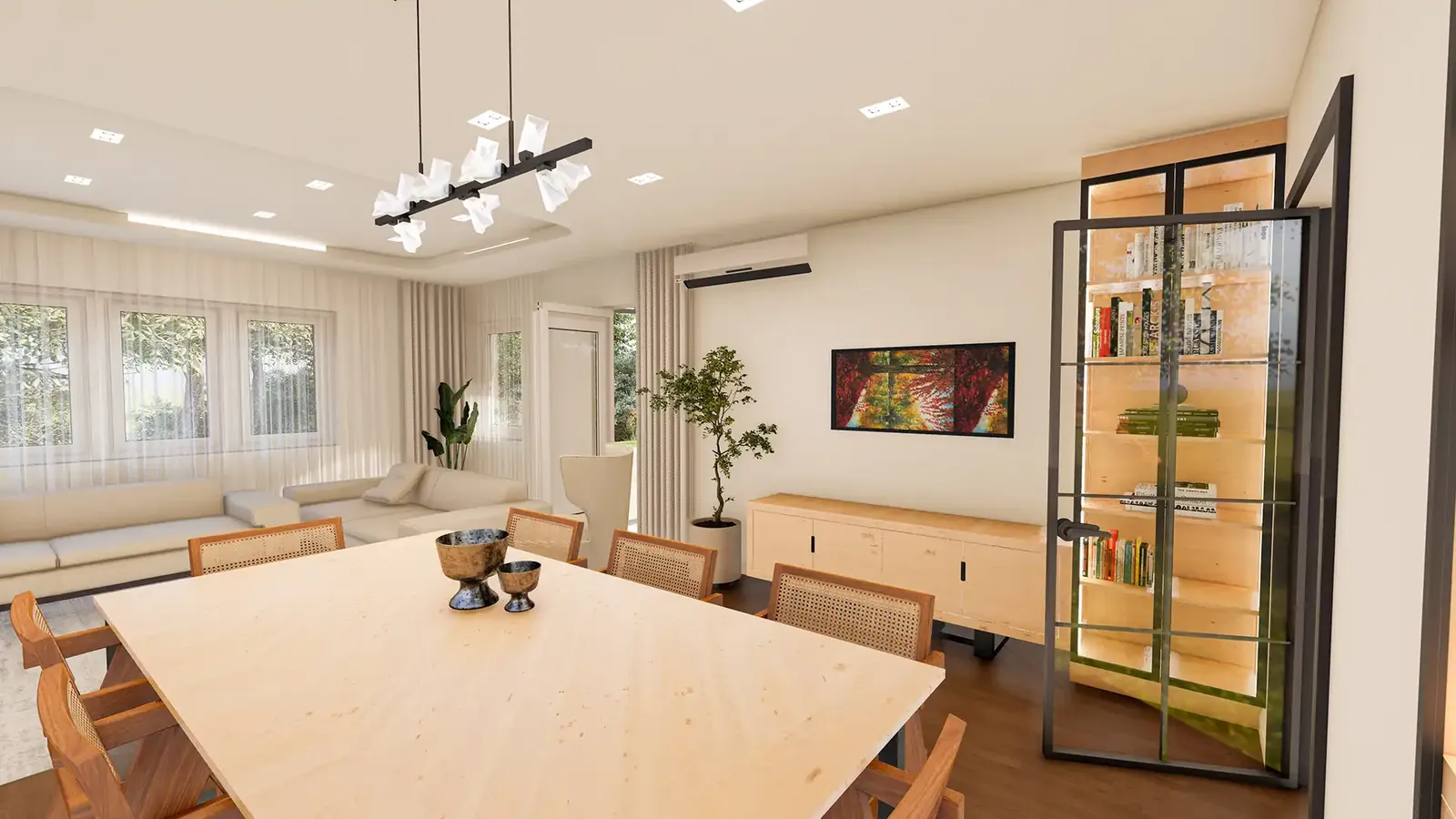

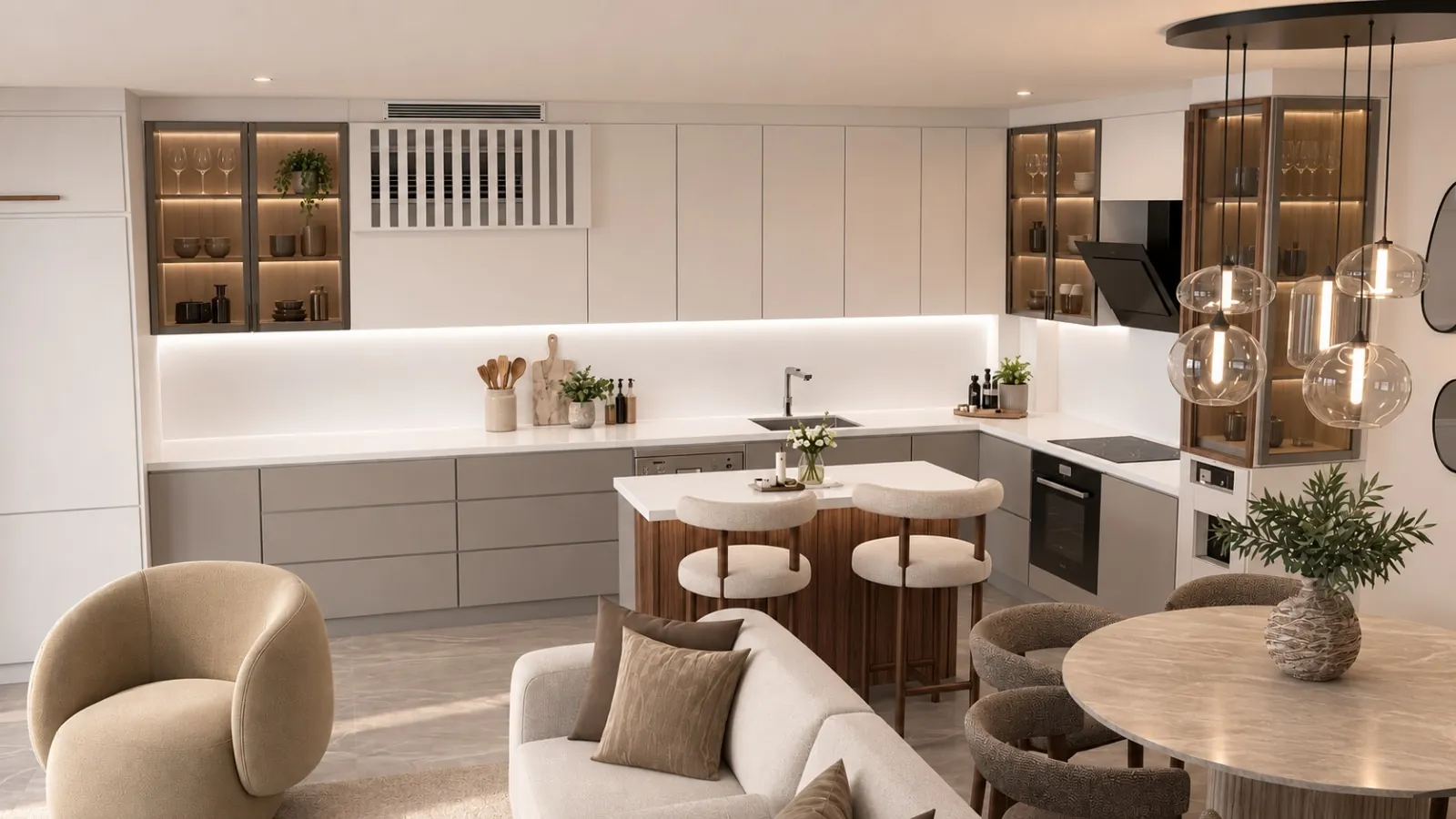
Whether a home looks elegant is usually a matter of decisions, not budget. A few habits found in almost everyone’s home, often unconsciously, can make even the best furniture look ordinary. In this episode of our “details that make your home look cheap” series, we gathered the four issues that most affect the overall quality of a space, with practical solutions for each.
1. Cluttered entrances
The entrance is a home’s first impression and the place where all the flow begins. When shoes, bags, coats and things left lying around start to pile up here, the home looks messy and small as soon as you step through the door. Keep as few items as possible in the entrance and use completely functional furniture: a shoe cabinet with doors, a built-in coat closet, a small tray for keys and a mirror are enough for most homes.
2. Excess and mixed styles
It’s perfectly natural to like more than one style; but using them all in the same room weakens both the style and the perceived quality of the home. Whatever direction you go in (modern, classic, boho, minimal…), apply it simply and consistently. If you want to take inspiration from a different style, limit it to a single accessory, light fitting or artwork. To clarify your style, take a look at our guide to furniture styles.
3. Too many small decorative objects
We all love collecting: holiday souvenirs, gifts, little ornaments… But when lots of small objects come together, they lower the home’s “grown-up level” and create a cluttered look. You don’t have to remove them all; reduce their number, group them and highlight the pieces that truly represent you. A three-piece composition on a single shelf is far more effective than twenty objects spread across five shelves.
4. Empty walls
Minimalism is beautiful; but completely bare walls can make a space look unfinished. Creating a “feature wall” in each room noticeably raises the quality of the home. To do this:
- You can use a different paint colour or texture.
- You can add depth to the wall with moulding or panelling.
- You can hang a large artwork or mirror.
- You can create a small focal composition on a console or sideboard placed in front of the wall.
If you’re curious about how paint changes the perception of a space, our article on the visual effect of paint is for you.
These tips are a matter of taste, not budget
None of these points require expensive investments. The aim is for everyone to create a living space that suits their taste and reflects who they are. Often, taking away makes more of a difference than adding. If you haven’t read the first part of the series, continue with our article 10 details that make your home look cheap.
Frequently asked questions
How can I make a small entrance feel more spacious?
Use closed storage instead of open shelves, a large mirror and a single warm light source. Keeping the floor clear also makes the space look larger than it is.
Is a feature wall needed in every room?
One per room is enough; usually the wall that catches the eye first at the entrance or the one the seating group faces is chosen. More than one feature wall reduces the effect of each.
If you’d like to transform your home from start to finish, take a look at our decoration & renovation service.