
When you walk into some homes, you feel a “wow” effect in the first second; but you can’t attribute it to a single piece of furniture or an expensive material. Because what creates that effect is the sum of small decisions that speak to each other. In this article, we describe three key points for a home that is elegant but understated.
1. Floor and wall harmony
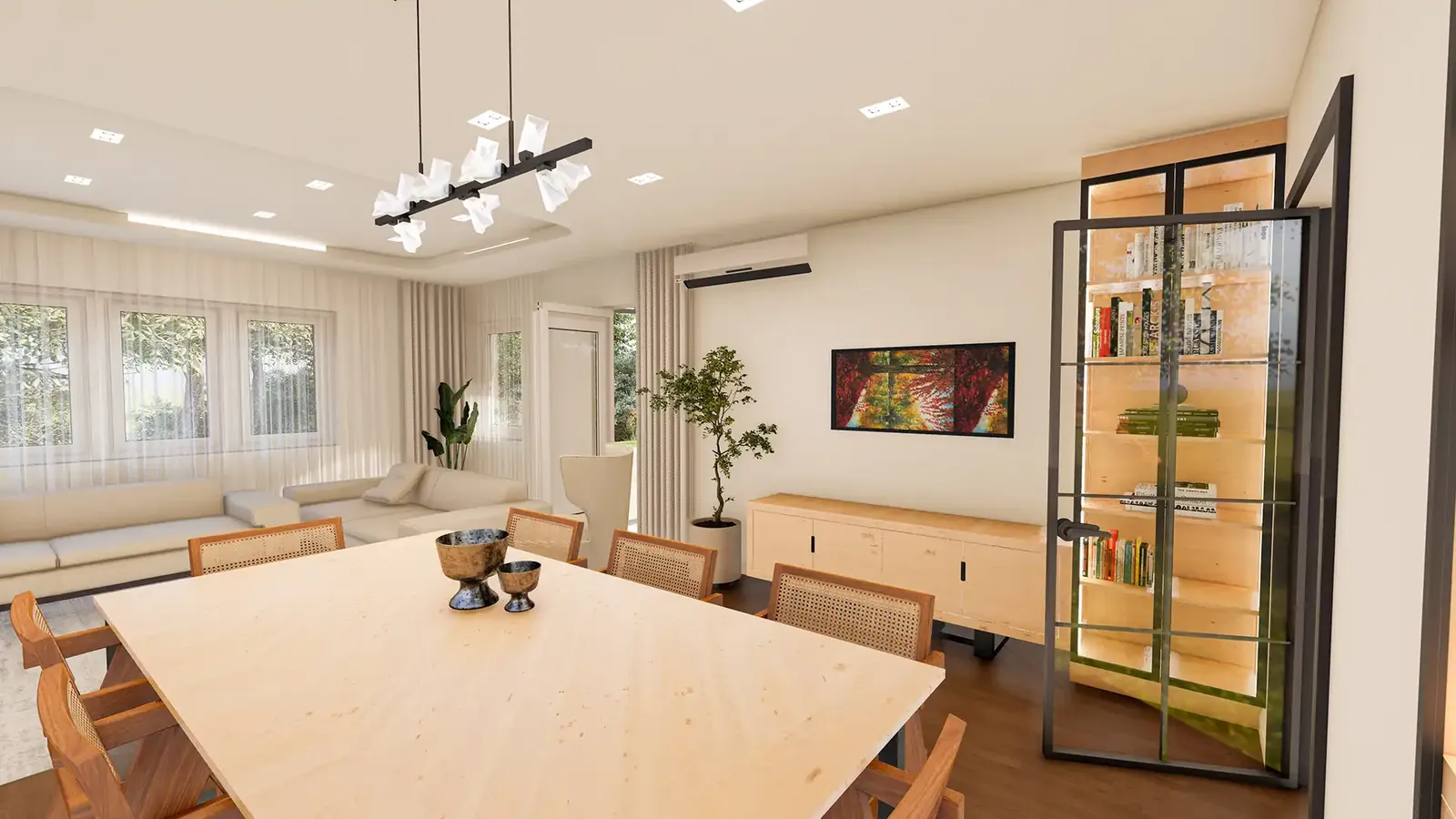
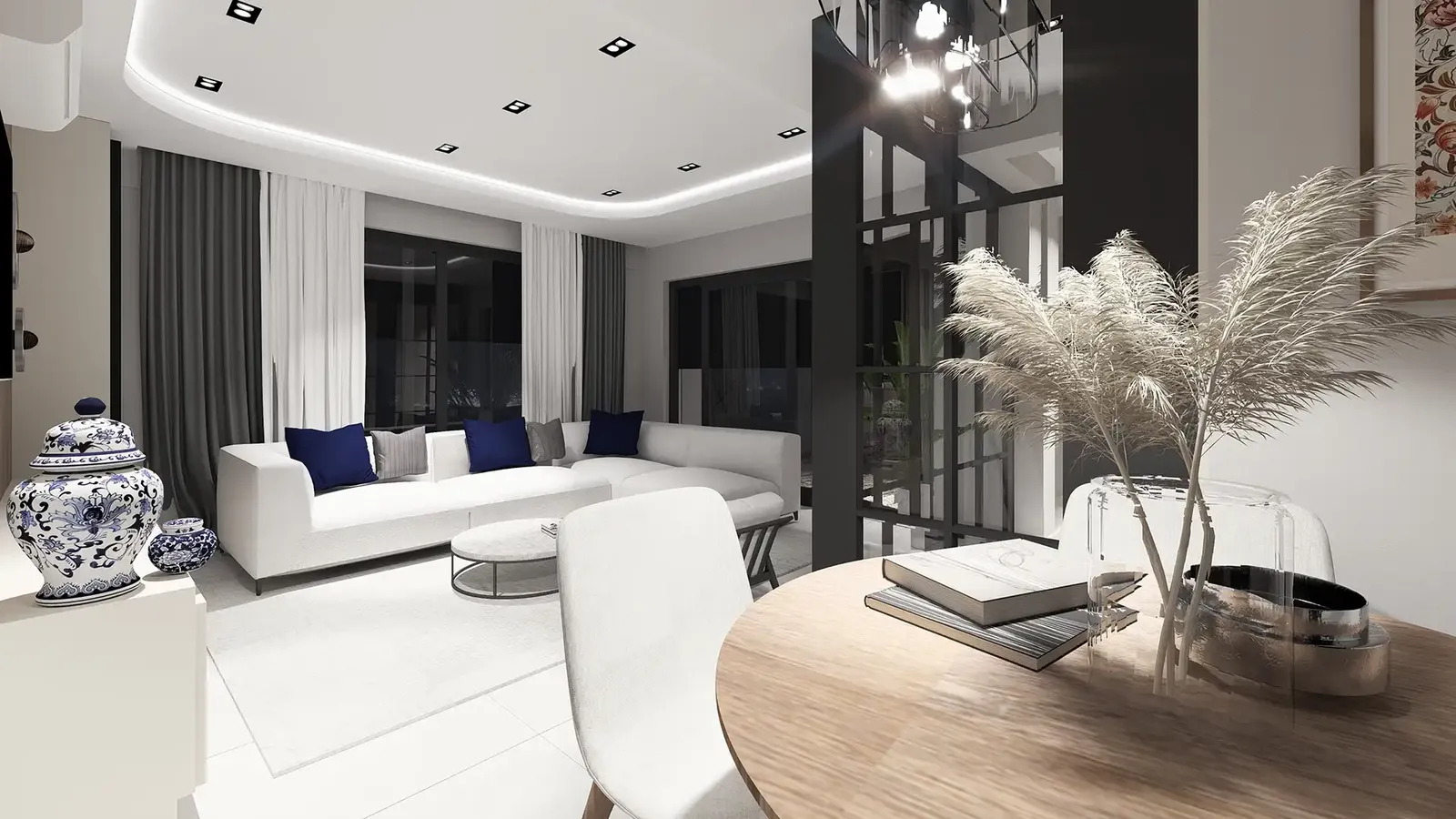
Floor and wall tones need to speak to each other. Sometimes this means using tones from the same family, sometimes creating a deliberate contrast. For example, warm oak parquet with off-white walls creates a soft unity, while a light travertine floor with a dark navy wall creates a controlled contrast. Without this harmony, no matter how beautiful the furniture, the space feels like it lacks cohesion.
2. The right lighting
Lighting is the layer of design that makes the most difference but is the most neglected. Even the colour of a light can completely change the ambience of a space. In living areas, warm white light in the 2700–3000 K range creates a more inviting atmosphere, while relying on a single ceiling fixture makes the space look flat and ordinary. A few light sources (general, directional and decorative) at the right temperature and angle instantly change the atmosphere of a home.
- General lighting: hidden lighting, spotlights or linear fittings.
- Task lighting: kitchen worktop, reading corner, desk.
- Decorative lighting: floor lamp, table lamp, wall sconce.
3. Small details
Changing the skirting boards, renewing door handles, making socket and switch covers uniform… These details, which seem unimportant at first glance, significantly change the energy and perceived quality of a home. Even a single floor lamp in the right place can transform the mood of a room. Because such touches can usually be done without major renovation, they are the improvements with the highest “benefit/cost” ratio.
Elegant but understated
What luxurious-looking homes have in common is that everything has been thought through together. Instead of a single expensive piece, create a set of simple decisions that complement each other. For more ideas, read our articles on details that spoil your home’s elegance and why a home looks balanced.
Frequently asked questions
What is the cheapest way to make a home look more expensive?
Layering the lighting and renewing small hardware such as door handles and socket covers are the steps that make the most difference at low cost.
Should I choose warm white or daylight?
Warm white (2700–3000 K) for living areas and bedrooms, and neutral white (3500–4000 K) for task points such as the kitchen work area and bathroom mirror, is a good start.
If you’d like a holistic proposal for your space, contact us via our decoration & renovation page.