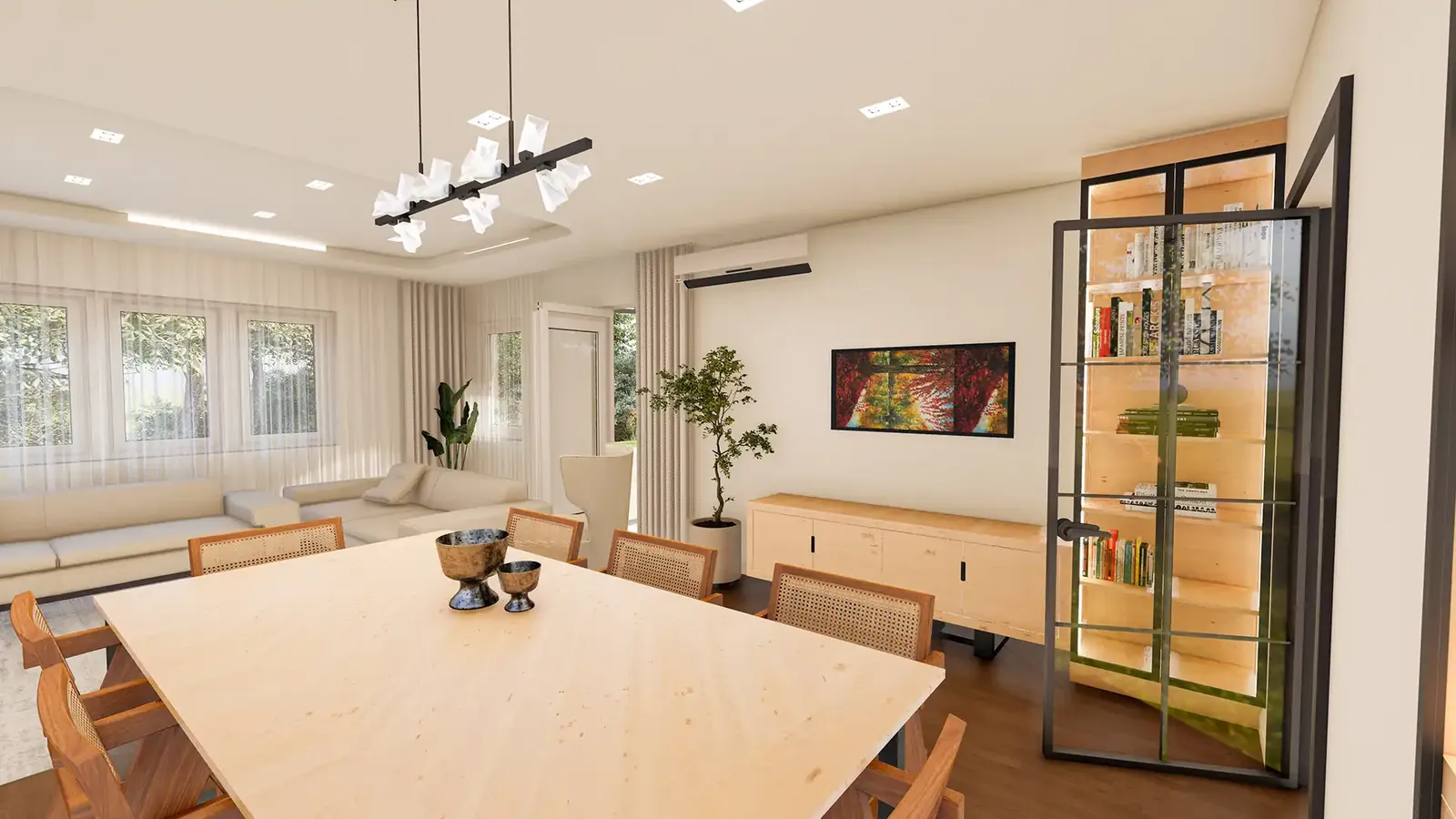

The same furniture can create a completely different living room with a different layout. The right layout eases circulation, clarifies the focal point and makes the space look larger than it is. In our video, we explained four basic layout solutions by living room type.
1. Symmetrical layout
An arrangement with sofas or armchairs facing each other is called a symmetrical solution. It works very well in square, well-proportioned living rooms, creating a conversation-focused, classic and elegant seating group. The coffee table in the middle and the rug beneath it tie the two sides together.
2. L-shaped living rooms
In L-shaped living rooms, the longest wall is often the one with windows. If it doesn’t block circulation, placing the sofa against this wall and the TV unit opposite is the most sensible solution. Pay attention to light reflecting on the TV screen; position the screen perpendicular to the window or in a way that minimises glare.
3. Asymmetrical (irregular) living rooms
In living rooms with corners, recesses and projections or no particular order, the most important thing is to create a focal point. This could be a fireplace, a large artwork, a window with a view or a designed TV wall. The seating group is arranged around this focal point, and the irregularity turns into a deliberate composition.
4. Long rectangular sitting rooms
In long, narrow rooms, take as minimal an approach as possible. Place the seating group against one wall and the TV opposite. Since the distance is short, choose the screen size accordingly; a very large TV in a narrow room strains the eyes and makes the room feel smaller. Dividing the room into functions such as living and dining is also an effective way to balance long spaces.
When planning the layout
- First mark the doors, windows and walkways.
- Determine the focal point and arrange the seating group around it.
- Plan socket and lighting points according to the layout.
- Think about the rug size together with the layout; see what to consider when choosing a rug.
If you’d like to see examples for small and narrow spaces, read our article on making small spaces functional.
Frequently asked questions
Can a sofa be placed in front of a window?
Yes, as long as it doesn’t block circulation or prevent the window from opening. Keeping the back of the sofa 20–30 cm away from the window leaves room for curtains and ventilation.
What should the distance between the TV and the sofa be?
As a general rule, a distance of about 1.5–2.5 times the screen diagonal is recommended.
To plan your home’s layout together, take a look at our interior design service.